In Irving, a damaged garage door panel usually comes from spring hail, a bumper in a tight townhome driveway, or years of a west-facing door baking in the afternoon sun. One panel can often be replaced on its own to match the rest of the door, and the written estimate goes to whoever approves the work. The estimate is free.
Tell us what the door is doing. The estimate is free either way.
A sectional garage door is a stack of horizontal panels joined by hinges, with rollers at the ends of each panel riding in the tracks. A damaged panel can be unhinged and lifted out while the rest of the door stays up, and a new one goes into the same place.
For that to work, the new panel must match the old ones in design, size and thickness, which means the manufacturer has to still make that door. The label on the inside of the door names the maker, and a few measurements confirm the rest before anything is ordered. Builder doors on newer townhomes are often still in production, which makes a single-panel repair straightforward; older single-family doors are more of a coin toss, and the label settles it.
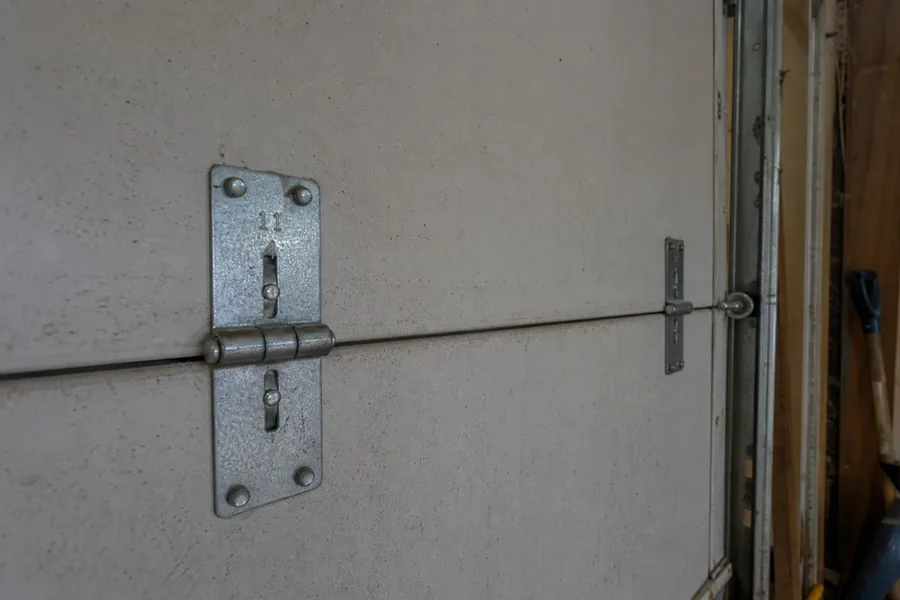
On a door that runs many times a day, damage isn't always a dent. The steel around the hinge fasteners works back and forth every time the panel turns into the curve of the track, and on a busy rental or townhome door it can crack and tear. The panel starts to separate at the seam, the door shudders, and the rollers on that row ride unevenly.
A small tear can sometimes be reinforced; a split end stile means the panel is replaced. The technician looks along every seam during the visit, since a second panel starting to go is easier to handle at the same appointment.
Spring storms here can leave a door covered in round dents. Those are mostly cosmetic: the panel still holds its shape and the door runs normally. A dent deep enough to crease a panel, or one that folds a rib, is a different matter, because the weakened panel bends further every time the door travels.
Embossed panels hide small dents far better than smooth ones, and insulated panels hold their shape better under impact. When a storm marks several panels at once, the estimate shows what each needs, and whether new panels or a new door is the better use of the owner's money.
Short driveways and close-set garages make bumper damage common, usually on the bottom two panels. In townhome communities, every garage door on the row is supposed to look the same, so a replacement panel has to match the community's door style and color, not just the rest of its own door. A trailer hitch or a moving truck backing up can catch a panel higher up, and those tend to crease rather than dent.
If the association has a door specification, it decides the order. When the original design is no longer made, the options are laid out for the owner or the association, including matching new doors where the rules require it.
A door that takes the afternoon sun all summer fades faster than one facing north. By the time a single panel needs replacing, the rest of the door may have shifted a shade, and a factory-fresh panel can stand out beside it.
You'll hear up front how close the match is likely to be. On some doors a new panel blends in well enough; on others, painting the whole door afterward gives the clean result an owner or an association expects. The sun also hardens the vinyl weatherstripping along the sides, so it is looked at during the same visit and replaced if it has shrunk away from the door.
Measured on the first visit, swapped on the second.
Tenants usually spot the damage first, and they are welcome to call. The visit and the measurements can happen with the tenant there, while the estimate goes to the owner or property manager who approves the work. Photos of the damage go with it, so the person deciding can see what the technician saw.
For owners with several units, the same door model often appears across a property. A panel ordered for one unit can be matched to the others, which keeps the doors consistent and future repairs simple.
A new panel can weigh slightly more or less than the one it replaces, and an insulated panel replacing a hollow one adds weight. The springs carry the door, so they are adjusted to the new weight before the visit ends.
The final check is the same on every job: the door stays put when stopped halfway by hand, runs smoothly on the opener, and stops and reverses against an object on the floor.
Usually, if the manufacturer still makes that design in the same size and thickness. The label and measurements tell us before anything is ordered.
The owner or the property manager you name. Tenants can call and meet the technician, and the estimate goes to whoever approves. Photos of the damage and the measurements go with the estimate so the decision can be made without another trip.
It's ordered to the same design and color. If the community has a door specification, that decides the order, and you'll hear how close the match will be.
Round dents are mostly cosmetic. A crease or a folded rib weakens the panel as the door travels, and that panel is worth replacing.
Then a matching panel can't be had, and the estimate lays out the options, including a new door where needed.
It can, so the springs are adjusted and the balance is tested by hand before the visit ends.
Yes. The panel is measured and the options are written down for free before any work or ordering.
We give a two-hour window rather than a day, and we call before setting off. Free throughout Dallas County. The estimate is free either way.
Would rather call? Call (972) 597-8723.
Tell us what the door is doing. The estimate is free either way.