
Doors here wear on two clocks: the heat, which dries out seals and lubricant every summer, and use, which adds up fast on a townhome or rental door that opens many times a day. In Irving a tune-up catches both before something breaks. The estimate is free, and it goes to whoever approves the work.
Tell us what the door is doing. The estimate is free either way.
A closed garage on a summer afternoon gets far hotter than the air outside, and the door sits in that heat for months. Lubricant thins out and runs off the rollers and hinges, leaving the bearings to grind. Vinyl and rubber seals bake, shrink and crack, which opens gaps along the sides and bottom. Opener electronics and their sensors work in the same oven.
None of that breaks a door overnight. It shows up as a door that gets louder, slower and stiffer through August, and an opener that strains until something gives. A tune-up timed before or right after the hottest stretch puts the moving parts back in order.
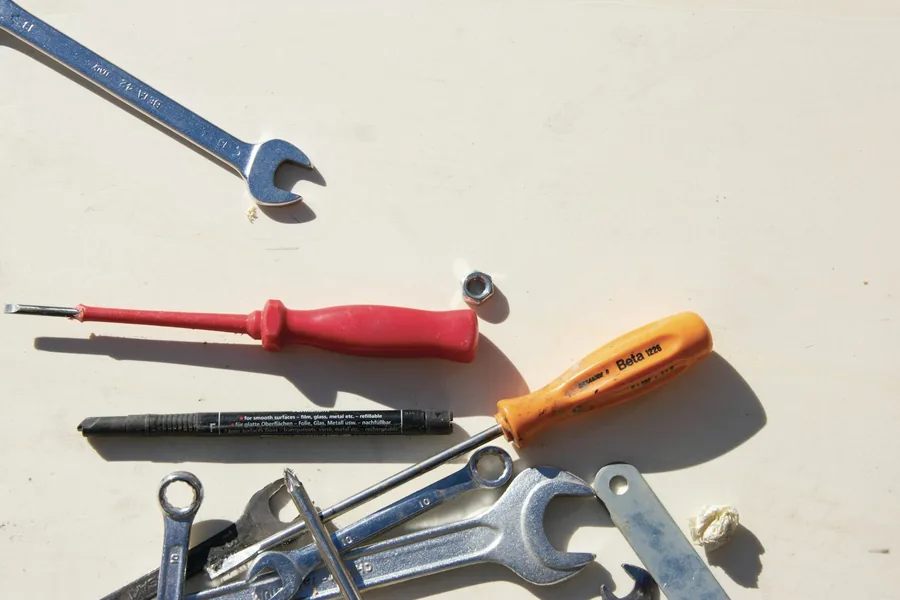
The technician arrives with what the whole door needs, not just the opener. First the motor is disconnected so the door can be raised by hand; if it won't hold still halfway, the springs are worn or set wrong, and that one finding explains a lot of what people blame on the opener.
After that, the springs, the cables and drums, each roller and hinge, the track brackets and their bolts, and the seals all get a look. The technician lubricates the moving parts with a product that stays put in the heat, matches the opener's force and travel to this particular door, lines up the photo eyes, and confirms the door backs off when it meets an object on the floor.
Springs and rollers wear by the trip, not by the calendar. A family house might use its door a few times a day. Three roommates sharing a townhome, a rental where several people park, or a household that comes and goes through the garage instead of the front door can run it many times that, and those doors burn through springs and rollers years before the house looks old.
On a busy door the visit measures wear rather than age. If the springs are near their limit, the findings say so, together with whether heavier springs built for more cycles make sense for that door.
Spring storms leave their own list. A hail dent deep enough can make a section scrape the track as it passes. Strong gusts lean on a closed door and work its brackets loose. When the power drops and comes back, an opener can lose track of its remotes, keypad or car buttons, and a door that suddenly won't close often has a photo eye nudged off line.
Caught during a visit, those are small corrections. Before the technician leaves, every way the household opens the door is tried, from the wall button to the car.
An owner or manager responsible for a group of units can have all the doors seen in one trip. Each unit gets its own findings, so it's clear which door needs attention now, which is wearing, and which is fine, and the estimate goes to the person who approves the work.
Doors of the same model on the same property tend to age the same way. Seeing them side by side often shows a pattern, like the same roller giving out on every unit, which is simpler to handle across the property at once than one service call at a time.
When a door stalls halfway or the opener groans, the motor gets blamed first. Most of the time the opener is fine and the door is heavy, dragging or out of line. Turning the force setting up to push through only hides the problem, and it makes the safety reverse less sensitive at the same time.
The tune-up deals with the door first, then sets the opener to it. If the opener itself is worn out, the findings say so plainly, with what a repair involves and whether a new unit makes more sense for a door that runs all day.
The same order for one door or a whole row of them.
Attached homes put the garage door right below a bedroom or beside the unit next door, so every rattle carries. Most of the racket comes from rollers that have dried out or worn flat, hinges that have worked loose, and an opener laboring against a door that isn't balanced.
The visit takes care of what's loose or dry while the technician is there and lists what's worn. Where peace and quiet is the priority, the list points to the changes that help most, sealed nylon rollers above all, so the owner can choose what to do.
The door is raised by hand to judge its balance; the springs, cables, drums, rollers, hinges, tracks and seals are gone over; the technician lubricates the moving parts; and the opener's settings, photo eyes, reverse and remotes are set and tried.
Yes. The tenant can call and be there for the visit, and the findings and any estimate go to the owner or manager who approves the work.
Ahead of the hottest weeks of summer, or right after them, and once more if spring hail or outages hit the door.
Yes. Busy doors wear by the trip, so the visit looks at how much life the springs and rollers have left, not how old the door is.
Yes. Each unit gets its own findings, and the estimate goes to the owner or manager.
You get it in writing with a free estimate, and the repair waits until the person approving gives the go-ahead.
Yes. Anything the visit uncovers is written up and estimated at no charge before work is scheduled.
We give a two-hour window rather than a day, and we call before setting off. Free throughout Dallas County. The estimate is free either way.
Would rather call? Call (972) 597-8723.
Tell us what the door is doing. The estimate is free either way.